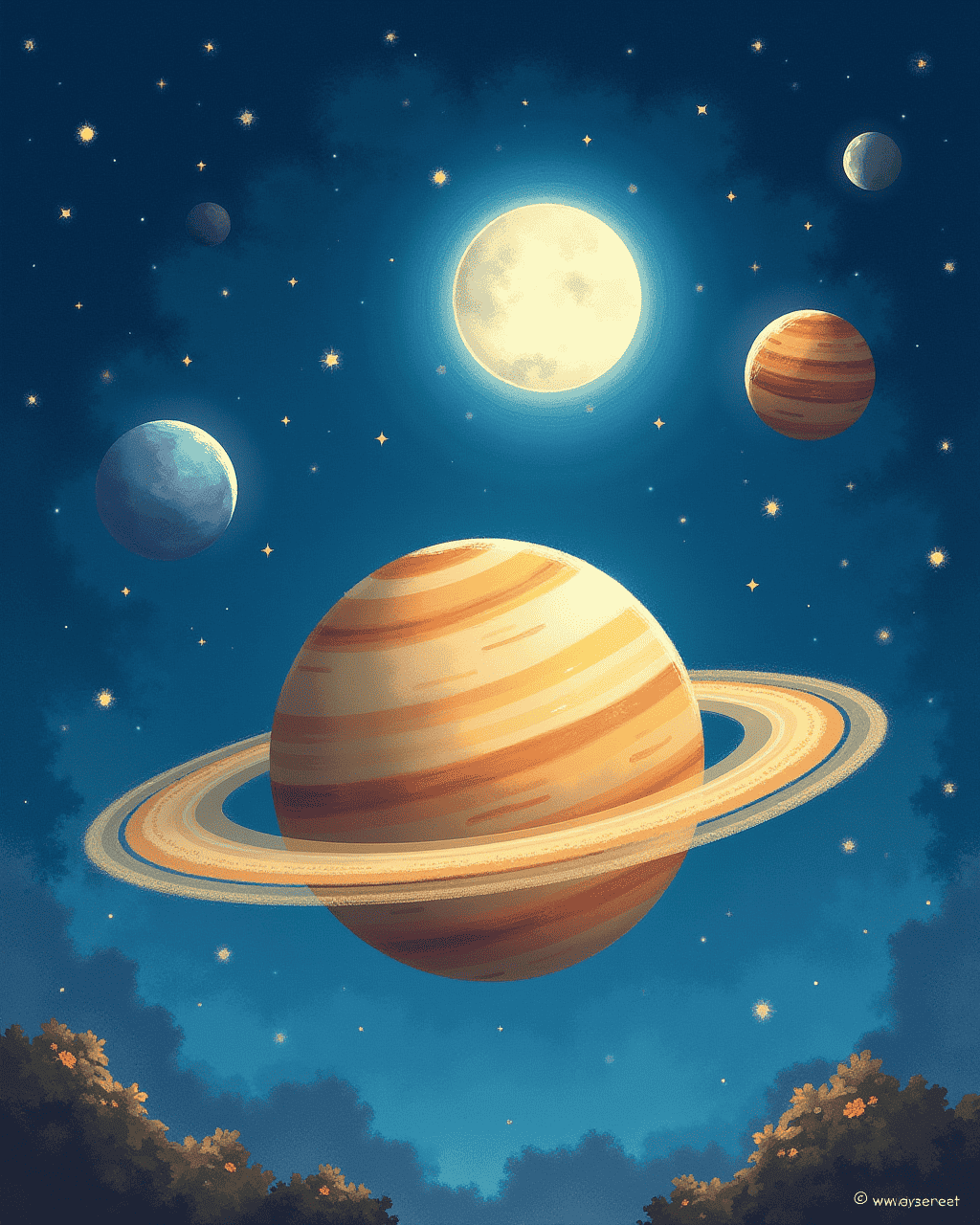
The Secret Life of Planets
A journey beneath the starry veil, uncovering the playful personalities that lurk in our solar system.
Age 5-7
A journey beneath the starry veil, uncovering the playful personalities that lurk in our solar system.
Mercury likes to zoom around the Sun. It is the smallest planet in the Solar System. Its surface is rocky and covered with many craters. The days on Mercury are long and hot, while the nights are very cold. Even though it is close to the Sun, it is surprisingly quiet and sleepy.
Venus wears a bright golden halo. It is called the "Evening Star" when it shines at sunset. The planet’s surface is scorching hot, like a giant baking sheet. Thick clouds of sulfuric acid keep the warmth trapped. The air on Venus smells oddly of roasted marshmallows.
Earth loves all kinds of life. It has oceans, mountains, and deserts. Plants and animals dance in its warm breezes. The green forests keep the air fresh. Humans use this planet as a playground and a school in one.
Mars has a rusty coat made of iron dust. Scientists think there was water once and maybe tiny rivers. Dust storms often cover the whole planet. The south pole has an ice cap that moves with the seasons. Rovers like Curiosity keep the planet’s secrets close.
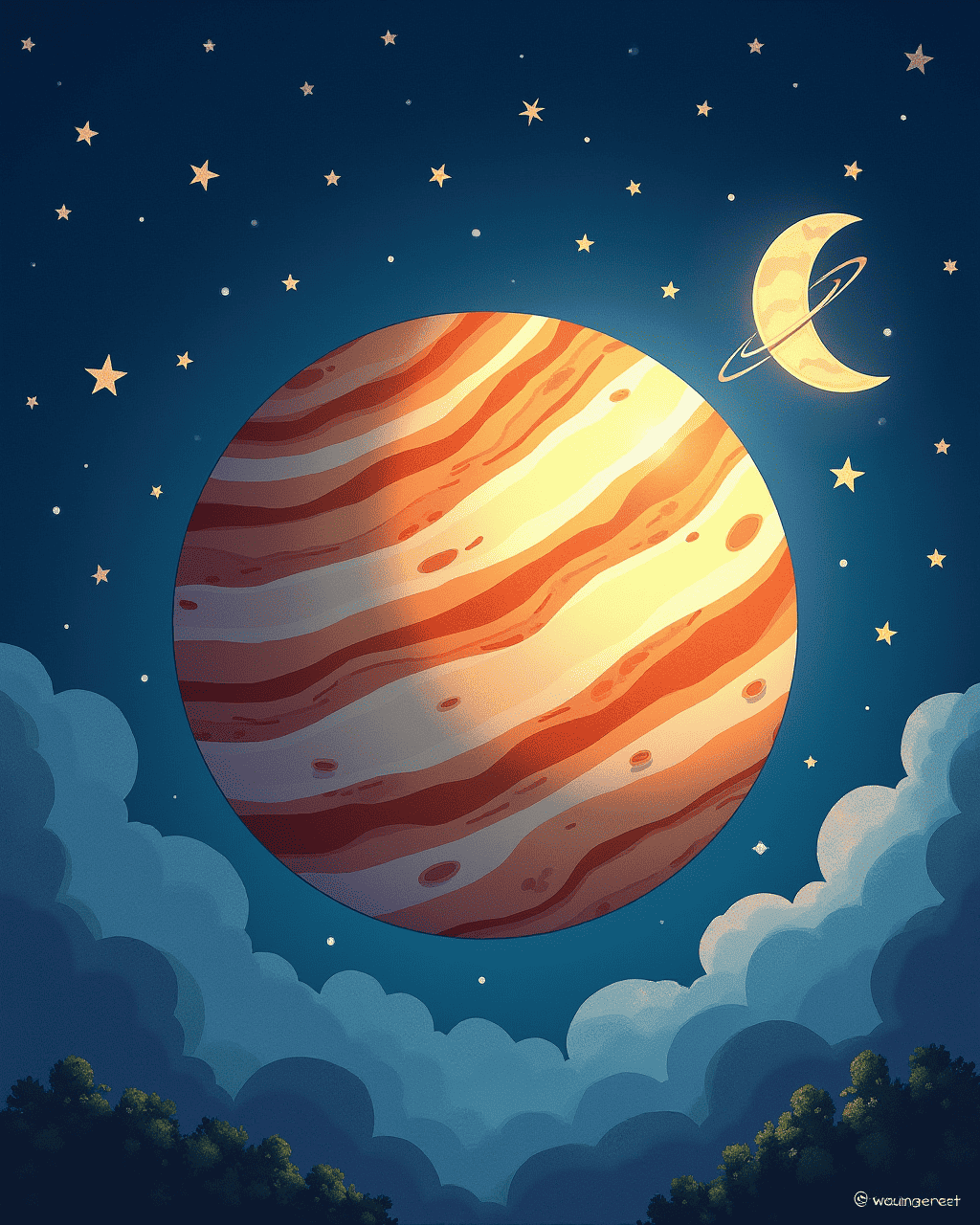
Jupiter is huge and made of swirling clouds. Its Great Red Spot is a giant storm that has raged for centuries. Though it is a gas giant, it has a solid core that keeps it together. Many moons, like Ganymede, orbit around this giant. Jupiter’s magnetosphere is the strongest in the solar system.
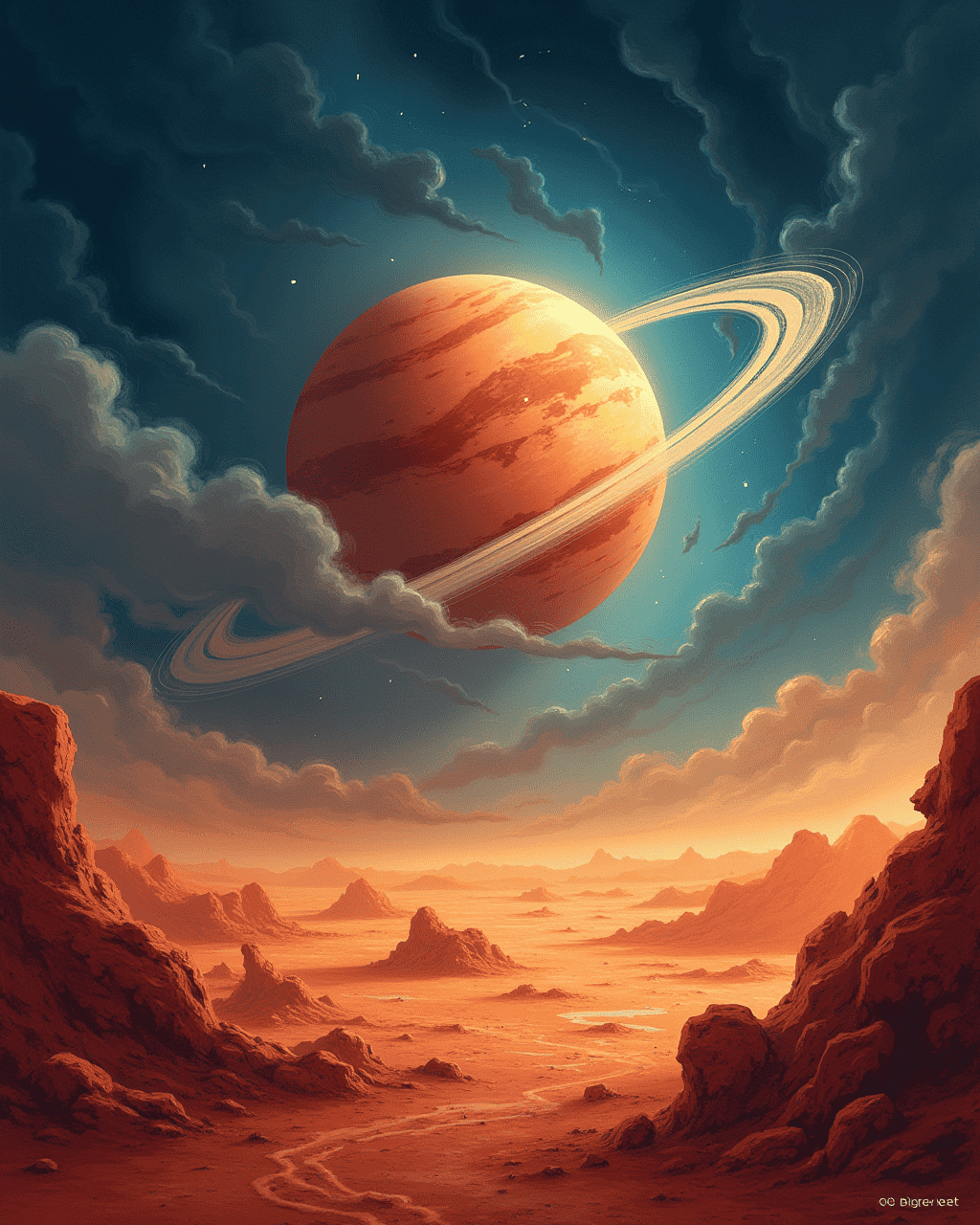
Saturn wears shimmering rings made of ice and rock. The rings look like a necklace around the planet. It has many moons, like Titan, that have thick clouds. Saturn’s atmosphere is a swirling mix of methane and nitrogen. The planet keeps its own playful music by rotating every 10.7 hours.